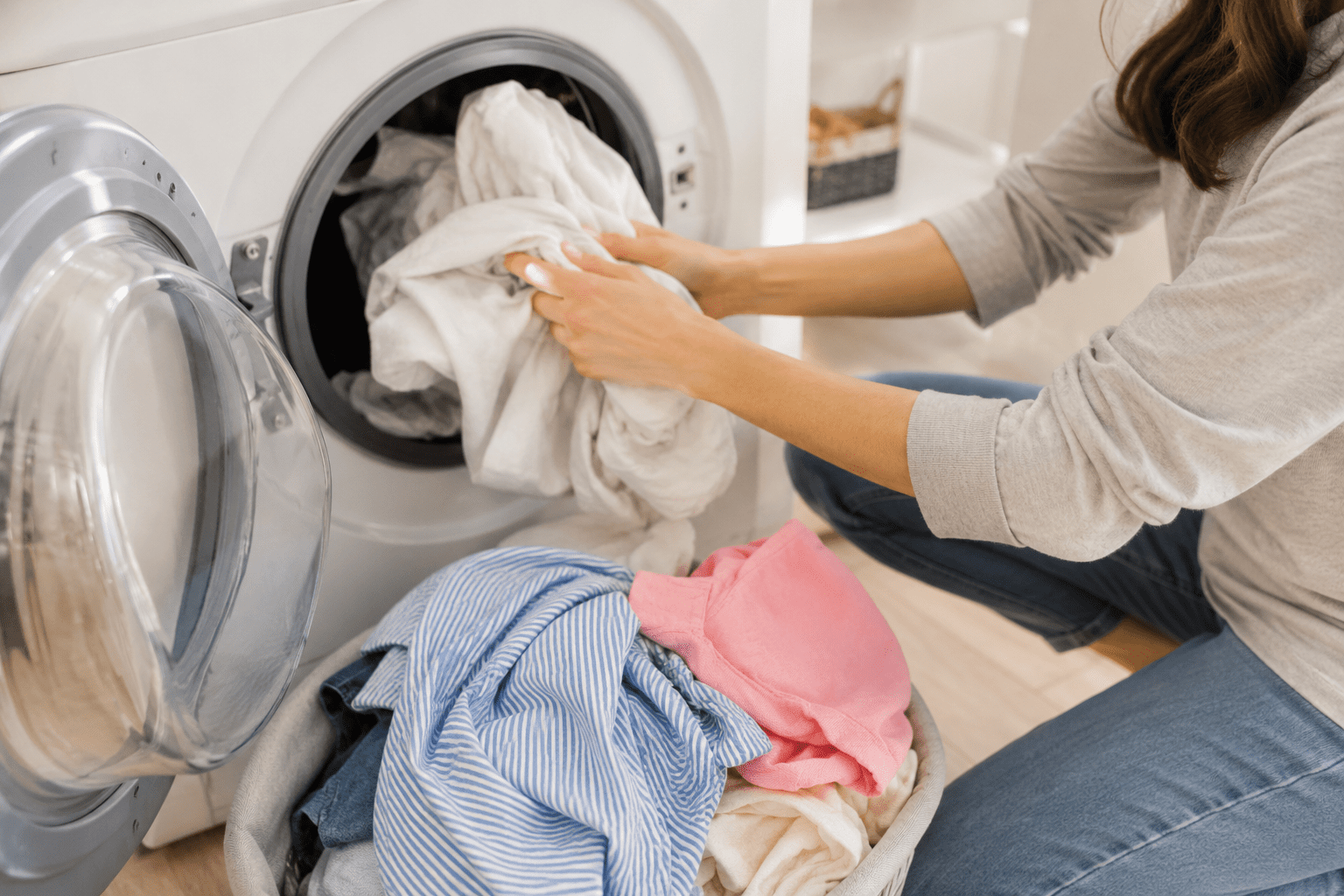
Let's be honest: almost everyone has thrown a questionable combination into the washer hoping for the best. Sometimes you get away with it. Other times, one dark shirt, delicate fabric, or high-heat item turns an entire load into a problem.
Before you start your next load, make sure you're not mixing these combinations together. Each one creates a specific problem, and some of the damage can be difficult, or impossible, to undo afterward.
This rule sticks around for a reason. While fading gets most of the attention, the real problem is dye bleeding. A single dark garment, especially if it's new, can leave lighter clothes looking dull, discolored, or stained after just one wash cycle.
New dark garments, especially deep-dyed cotton, black knits, and fresh indigo denim, release excess dye during the first several washes. That dye moves directly into lighter fabrics sharing the drum. Sometimes the result is barely noticeable. Sometimes a white tee comes out with a permanent gray cast. Either way, it does not wash out.
Darker fabrics, particularly fleece and dark sweaters, shed more during washing. Those fibers cling to lighter fabrics and show up as visible dark lint after drying. It's not a machine settings problem. It's a sorting problem.
Quick colorfastness test: Before washing a new dark garment for the first time, wet a small hidden area and blot it with a white cloth. If dye transfers to the cloth, that garment runs alone until the dye settles.
This is one of the most commonly skipped separation rules, usually in the name of saving time. The damage it causes is not worth the shortcut.
Terrycloth towels shed lint aggressively during both washing and drying. That lint attaches to delicate fabrics such as silk, fine cotton, lace, and most synthetics. On smooth fabrics it's annoying. On fine knits and lace, lint embeds into the weave itself and becomes a permanent texture change, no amount of re-washing removes it.
Towels are dense and heavy. Delicates are thin and light. In the same drum, the mechanical action of a full wash cycle means towels are essentially grinding against finer fabrics the entire time. The result: pilling, pulled threads, and surface abrasion that's clearly visible on finer materials.
For residents in Florence County, SC, this is one of the most common mixing mistakes. Running two loads feels less efficient, but replacing a cashmere sweater or silk blouse because of embedded lint damage costs far more than the extra water and electricity ever would.
The justification for this one usually sounds like: "It's all going in the same machine anyway." It's a reasonable assumption. It's also wrong.
Heavily soiled items, including gym clothes, work uniforms, kids' outdoor play clothes, and muddy gear, carry bacteria, soil, and odor compounds into the wash water. That water circulates through every item in the drum. Your office shirt that only needed a light refresh? It just cycled through that same water.
Synthetic activewear traps odor-causing bacteria deep in the fibers. Those bacteria transfer to other items in the same load, which explains why a mixed load sometimes leaves office clothes with a faint smell that wasn't there before the wash. The machine technically cleaned everything, but the bacteria moved around first.
This is the mixing mistake most people learn the hard way, usually after pulling a favorite sweater out of the wash with a snag across the front and no explanation for how it got there.
Zippers, Velcro closures, metal buttons, buckles, and decorative rivets catch on fine knit fibers during the wash cycle. The drum rotation means repeated contact. Each pass can pull a thread, snag a loop, or puncture a delicate fabric surface. One catch is often enough to damage a knit permanently.
Open Velcro patches collect fibers and hair in normal everyday use. In the wash, an open Velcro strip acts like sandpaper against any smooth or knit fabric it touches. One open patch in a load with a merino sweater is usually all the explanation needed for the damage.
Wash knitwear, delicates, and embellished garments in a mesh laundry bag or run them completely separately from anything with exposed hardware or aggressive closures.
These four separations cover the mixing mistakes that cause the most consistent, most avoidable clothing damage. Each one takes under ten seconds to apply at the machine.
You already know proper laundry sorting matters. You just need a service that does it right every time. Schedule your Wash and Fold Laundry Service with White Swan Cleaners today and enjoy expertly sorted laundry, eco-friendly cleaning, professional folding, and FREE Pickup & Delivery that gives you back valuable time every week.
Contact White Swan Cleaners: